






How Long Should a Detox Retreat be?
One of the most common questions people ask before booking a wellness retreat is:
"How long should a detox retreat be?"
The answer is not always straightforward. Some people are looking for a short weekend escape to recharge, while others want a deeper wellbeing experience that allows them to step away from daily pressures and focus entirely on their health.
The ideal retreat length depends on several factors, including your goals, lifestyle, experience level, and the amount of time you can realistically dedicate to yourself. For some people, a short retreat provides exactly the pause they need. For others, a longer programme allows more time to settle into healthier routines and fully disconnect from everyday demands.
As interest in detox retreats in the UK continues to grow, many people find themselves comparing different retreat durations before deciding which option is right for them. Weekend retreats, 3-night retreats, 6-night retreats, and longer programmes all offer unique experiences and benefits.
Rather than asking which retreat duration is objectively "best," it is often more useful to ask:
"What retreat duration is best for my goals right now?"
In this guide, we compare the most common retreat lengths, explain what guests typically experience during each one, and help you determine which option may be most suitable for your personal wellbeing journey.
Why Detox Retreat Length Matters
When people first begin researching retreats, they often focus on accommodation, location, treatments, or pricing. While these factors are important, retreat duration can significantly influence the overall experience.
A retreat is not simply about being away from home. It is also about creating enough time and space for the body and mind to slow down.
Many people arrive at a retreat carrying weeks, months, or even years of accumulated stress. The first few days are often spent adjusting to a slower pace, disconnecting from constant stimulation, and beginning to relax both mentally and physically.
This is one reason why retreat length matters. The longer the retreat, the more opportunity guests have to settle into new routines and fully immerse themselves in the experience.
One of the principles behind many juice retreats is allowing the digestive system a period of rest. By reducing the body's need to constantly process solid food, more energy may become available to support natural cleansing and elimination processes. This philosophy forms part of the detoxification approach followed by many Dr Morse practitioners and is one reason retreat duration can play an important role in the overall experience.
While weight loss may occur during a retreat, it is generally viewed as a secondary outcome rather than the primary goal. Most guests attend retreats because they want to improve their overall wellbeing, reduce stress, create healthier habits, and enjoy a meaningful reset from daily life.
The question therefore becomes less about how many nights you should spend at a retreat and more about how much time you need to achieve the experience you are seeking.
Weekend Detox Retreats (1–2 Nights)
For people who have never attended a retreat before, a weekend retreat can be an excellent introduction.
A one or two-night stay allows guests to step away from daily responsibilities and experience many of the benefits associated with a wellness retreat without committing to a longer programme.
Weekend retreats are often attractive to busy professionals, parents, and individuals who struggle to find extended periods away from work or family commitments.
Even a short break can help people:
- slow down mentally
- reduce stress
- reconnect with nature
- enjoy a change of environment
- focus on self-care
However, it is important to have realistic expectations.
Many guests only begin fully relaxing after the first day. By the time they settle into the retreat environment, it may already be approaching the end of their stay.
Weekend retreats often feel more like a wellness break than a complete immersion experience. They can be refreshing and restorative, but they may not provide the same depth of experience that longer retreats offer.
For those who are simply looking for a short escape from everyday pressures, a weekend retreat can be an excellent starting point.
3-Night Detox Retreats
A 3-night retreat provides a noticeably different experience compared to a weekend stay.
The additional time allows guests to move beyond the initial adjustment period and become more comfortable with the slower pace of retreat life.
Many people find that by the second or third day they are beginning to feel more relaxed, more present, and less distracted by the demands of everyday life. Sleep patterns often improve, stress levels begin to reduce, and the retreat environment starts to feel familiar rather than temporary.
For people seeking a short but meaningful reset, a 3-night retreat can provide a valuable balance between accessibility and immersion.
The extra time allows guests to participate more fully in activities such as yoga, meditation, nature walks, and wellbeing sessions while also enjoying periods of rest and reflection.
However, some guests still feel that just as they are beginning to fully unwind, it is time to return home.
This does not mean a 3-night retreat is ineffective. In fact, many people find it highly beneficial. It simply means that the experience may feel shorter than they would ideally like, particularly if they are recovering from significant stress or burnout.
For those with limited availability, a 3-night retreat can offer a meaningful wellbeing boost while remaining practical and manageable.
6-Night Detox Retreats
For many people, a 6-night detox retreat represents the ideal balance between practicality and immersion.
Unlike shorter retreats, a six-night stay provides enough time for guests to fully settle into the retreat environment and embrace a slower pace of life.
The first couple of days are often spent adjusting. Guests gradually disconnect from work-related thoughts, daily responsibilities, and the constant stimulation that often dominates modern life.
By the middle of the retreat, many people report feeling calmer, more focused, and more connected to themselves. They have had time to establish healthier routines, participate in wellbeing activities, and fully experience the benefits of being away from everyday pressures.
One reason many guests appreciate a 6-night retreat is that it allows more time for the body and mind to rest.
According to the detoxification philosophy followed by many Dr Morse practitioners, reducing the need for continuous digestion allows the body to focus more of its resources on natural cleansing and elimination processes. This concept of digestive rest forms an important part of the retreat experience and is one reason many guests choose a longer retreat rather than a short weekend programme.
Guests also have more opportunities to participate in additional wellbeing support such as yoga, meditation, nature walks, and personalised guidance. Some choose to continue their wellness journey through additional detox consultations designed to support long-term wellbeing goals beyond the retreat itself.
While weight loss may occur during the retreat, it is generally considered a secondary outcome rather than the primary objective. The focus remains on creating an environment that supports rest, wellbeing, mindfulness, hydration, and healthier habits.
For many guests, six nights feels long enough to create meaningful change while still being practical to fit into normal life.
Longer Detox Retreats (7–14+ Nights)
Longer retreats provide the greatest opportunity for complete immersion in a wellness-focused lifestyle.
Guests have more time to disconnect from daily pressures, establish healthier routines, and participate in extended wellbeing support. The additional days often allow people to move beyond the initial adjustment phase and settle more deeply into the retreat experience.
For some individuals, particularly those who have attended retreats before, longer programmes can feel incredibly rewarding. The extended time away from everyday responsibilities creates more space for personal reflection, mindfulness, and lifestyle change.
However, longer retreats also require a greater commitment of both time and budget. They may not be practical for everyone, particularly those balancing work, family, or other responsibilities.
While longer retreats certainly have their advantages, many guests ultimately discover that they do not necessarily need two weeks away to experience meaningful benefits. A well-structured retreat with the right environment, support, and activities can often provide a powerful reset within a much shorter timeframe.
This is one reason why many people consider a 6-night retreat to be one of the most balanced options available.
What Is the Best Detox Retreat Duration?
After comparing different retreat lengths, many people naturally arrive at the same question:
What is actually the best detox retreat duration?
The truth is that there is no single answer that applies to everyone.
The ideal retreat length depends on your personal goals, current lifestyle, wellbeing needs, and previous retreat experience. Someone looking for a brief wellness break may find a weekend retreat perfectly suitable, while another person recovering from prolonged stress may benefit from a longer and more immersive experience.
What matters most is not simply the number of nights you spend at a retreat, but how effectively that time allows you to disconnect from daily pressures and focus on your wellbeing.
For many people, retreat duration can be viewed like this:
- Weekend retreats are ideal for short escapes and introductions to wellness retreats.
- 3-night retreats offer a meaningful reset without requiring a full week away.
- 6-night retreats provide a balanced experience with enough time to fully settle into the retreat environment.
- Longer retreats offer extended immersion and deeper lifestyle support.
For those looking for a balance between practicality and a more immersive wellbeing experience, a 6-night retreat is often considered one of the most effective options available.
Detox Retreat Duration Comparison
Before deciding which retreat length is right for you, it can be helpful to compare the different options side by side.
|
Retreat Duration |
Best For |
Main Benefit |
|
Weekend Retreat (1–2 Nights) |
Beginners and busy professionals |
Quick wellness break |
|
3-Night Retreat |
People seeking a short reset |
More time to relax and disconnect |
|
6-Night Retreat |
Most retreat guests |
Balanced wellbeing support and immersion |
|
7–14+ Night Retreat |
Experienced retreat guests |
Extended immersion and recovery time |
While longer retreats naturally provide more time for immersion, many guests find that a structured 6-night retreat offers an excellent balance between meaningful wellbeing support and practical scheduling.
Why Environment Matters More Than Duration Alone
Although retreat length is important, the environment often has an even greater influence on the overall experience.
A longer retreat does not automatically guarantee better results. Likewise, a shorter retreat can feel incredibly restorative when the environment is calm, supportive, and specifically designed to encourage wellbeing.
This is one reason why many people find it difficult to achieve the same level of relaxation at home. Even when trying to focus on wellness, they often remain surrounded by work responsibilities, digital distractions, household tasks, and everyday stress.
A dedicated retreat environment creates a different experience.
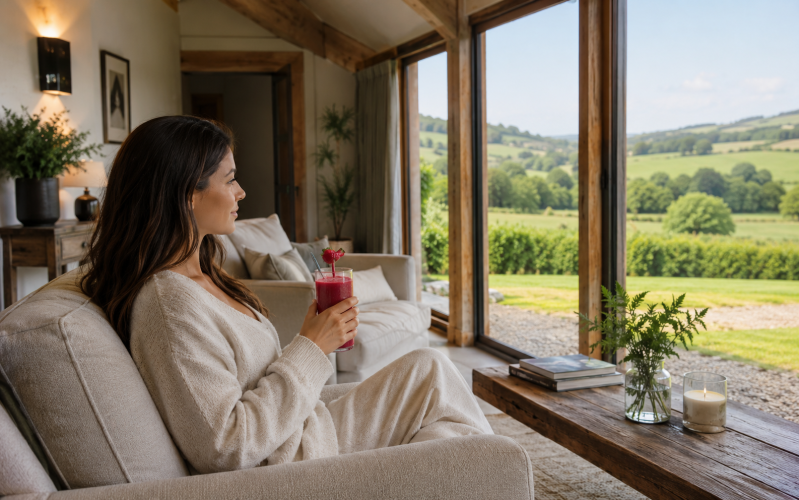
Guests staying at the retreat house in the Cotswolds are surrounded by peaceful countryside views, tranquil gardens, comfortable living spaces, and an atmosphere designed to support rest and reflection.
For many people, this change in environment becomes one of the most transformative parts of the retreat itself.
The opportunity to temporarily step away from daily pressures often allows guests to experience a deeper sense of calm regardless of whether they stay for three nights, six nights, or longer.
Finding the Right Retreat for Your Goals
Rather than focusing only on retreat duration, it is worth considering what you hope to gain from the experience.
If your goal is simply to take a short break from daily life, a weekend retreat may be enough.
If you are looking for a more meaningful wellbeing reset but have limited availability, a 3-night retreat may provide the balance you need.
For many people seeking a deeper experience that supports hydration, mindfulness, emotional wellbeing, and healthier routines, a 6-night retreat often feels like the ideal middle ground.
Those seeking extended immersion, more time for reflection, or additional personal development may find longer retreats particularly rewarding.
Regardless of duration, the most successful retreats are those that align with your personal goals, lifestyle, and current wellbeing needs.
If you are new to wellness retreats, our guide to a UK juice retreat and detox retreats in the UK provides a helpful overview of what to expect.
Many guests also discover that stress reduction becomes one of the most valuable outcomes of a retreat experience. You can learn more about this in our article on the benefits of a juice retreat for stress recovery.
Final Thoughts
Choosing the best detox retreat duration is ultimately a personal decision.
There is no universal retreat length that works for everyone. The right choice depends on your goals, schedule, experience level, and the type of wellbeing experience you are looking for.
Weekend retreats can provide a refreshing introduction to wellness retreats. Three-night retreats offer a meaningful short reset. Longer retreats create opportunities for deeper immersion and personal reflection.
For many guests, however, a 6-night retreat strikes a unique balance. It provides enough time to fully settle into the retreat environment, embrace healthier routines, focus on hydration and mindfulness, and experience the benefits of stepping away from everyday pressures without requiring an extended absence from normal life.
Most importantly, a retreat should never be viewed simply as a number of nights away. The true value comes from the opportunity to slow down, reconnect with yourself, and create space for wellbeing in a world that rarely encourages either.
